
The 6th Southeast Asian Conference on Education (SEACE2026)

February 05-09, 2026 | Singapore EXPO, Singapore & Online


Welcome to The 6th Southeast Asian Conference on Education!

Held in partnership with the IAFOR Research Centre at the Osaka School of International Public Policy (OSIPP) at Osaka University, Japan, and our global partners, and supported by the Singapore Exhibition & Convention Bureau, SEACE2026 has firmly established itself in our calendar as a welcome complement to our global conference programme.

This year, we return to Singapore, situated centrally in the Southeast Asian region, which also comprises Indonesia, Vietnam, Laos, Brunei, Thailand, Myanmar, the Philippines, Cambodia, and Malaysia. Southeast Asia is a vibrant, thriving, and developing region, and boasts a great diversity of peoples, cultures, and ethnicities. As a financial and educational hub, Singapore is a great location to help further the IAFOR mission of encouraging interdisciplinary discussion, facilitating intercultural awareness, and promoting international exchange.

As an organisation that engages across all sectors of society, and with multiple stakeholders to engage in some of the biggest challenges and issues the world faces from an interdisciplinary perspective, we have aligned our research initiatives and conferences with the implementation of the 2030 Agenda for Sustainable Development as outlined in the 17 Sustainable Development Goals (SDGs), and around IAFOR’s four key themes: Technology and Artificial Intelligence; Humanity and Human Intelligence; Global Citizenship and Education for Peace; and Leadership.

SEACE2026 encourages academics and scholars to meet and exchange ideas and views in a forum stimulating respectful dialogue, and like our long-running events elsewhere in the world, will afford an exceptional opportunity for renewing old acquaintances, making new contacts, networking, and facilitating partnerships across national, cultural, and disciplinary borders. IAFOR was made possible, and is a response to, the forces of globalisation, and the understanding that many of the most pressing challenges, whether felt or experienced locally, would require global cooperation and action to address.

This year, we are pleased to be launching The Southeast Asian Conference on Arts and Humanities (SEACAH2026) to be held alongside SEACE. It will be our first such conference in the region, and we expect the joint event to excite even greater interest, and great outcomes. Registration for either of these conferences will allow delegates to attend any joint plenary session or parallel sessions as desired.

I look forward to seeing you in Singapore!

For and on behalf of the IAFOR International Academic Board

Dr Joseph Haldane, Osaka University, Japan & University College London, United Kingdom
Chairman and CEO, IAFOR

Professor Jun Arima, University of Tokyo, Japan
President, IAFOR

Professor Anne Boddington, Middlesex University, United Kingdom
Executive Vice-President and Provost, IAFOR


Key Information
  • Location & Venue: Singapore EXPO, Singapore & Online
  • Dates: Thursday, February 05, 2026 ​to Monday, February 09, 2026
  • Early Bird Abstract Submission Deadline: August 29, 2025*
  • Final Abstract Submission Deadline: October 31, 2025
  • Registration Deadline for Presenters: December 05, 2025

*Submit early to take advantage of the discounted registration rates. Learn more about our registration options.


Call for Papers

The SEACE2026 Conference Programme Committee welcomes papers from a wide variety of interdisciplinary and theoretical perspectives, and submissions are organised into the following streams:

  • Teaching & Learning
  • Educational Structures
  • Community & Society
  • Language & Culture
  • Psychology, Mind & Brain
  • Innovation & Technology
  • Special Themes and Areas of Focus

IAFOR's Conference Themes for 2025-2029
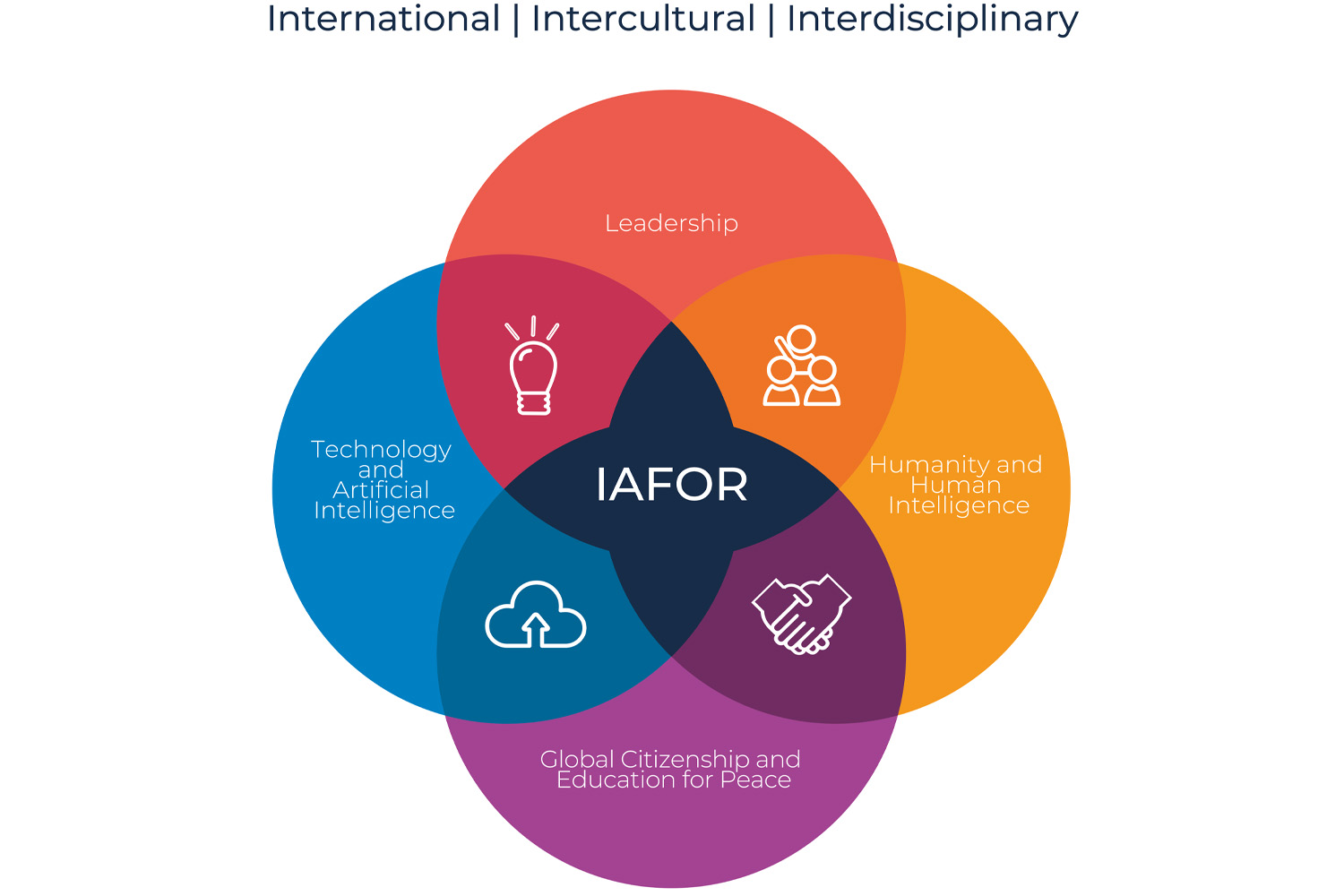
IAFOR Themes 2025-2029
Our selected themes for 2025-2029 bring together ideas and encourage research and synergies in the following areas:

  • Technology and Artificial Intelligence
  • Humanity and Human Intelligence
  • Global Citizenship and Education for Peace
  • Leadership
  • Our four themes can be seen as standalone themes, but they are also very much in conversation with each other. Themes may be seen as corollaries, complementary, or in opposition/juxtaposition with each other. The themes can be considered as widely as possible and are designed, in keeping with our mission, to encourage ideas across the disciplines.


    Speakers

    • Umberto Ansaldo
      Umberto Ansaldo
      VinUniversity, Vietnam
    • Jervais Choo
      Jervais Choo
      National Heritage Board, Singapore
    • Joseph Haldane
      Joseph Haldane
      The International Academic Forum (IAFOR), Japan
    • Eric Hawkinson
      Eric Hawkinson
      Kyoto University of Foreign Studies, Japan
    • Daniel Hoffman
      Daniel Hoffman
      University of Hawaiʻi at Mānoa, United States
    • Michael Klemm
      Michael Klemm
      Singapore Education Network, Singapore
    • Ben Leong
      Ben Leong
      National University of Singapore, Singapore
    • Shamila Janakiraman
      Shamila Janakiraman
      University of Hawaiʻi at Mānoa, United States
    • Lisa Lim
      Lisa Lim
      VinUniversity, Vietnam
    • David Ocón
      David Ocón
      Singapore Management University, Singapore
    • Justin Quezon
      Justin Quezon
      University of Hawaiʻi at Mānoa, United States
    • Tim Winter
      Tim Winter
      National University of Singapore, Singapore

    Read Last Year's Conference Report


    Conference News

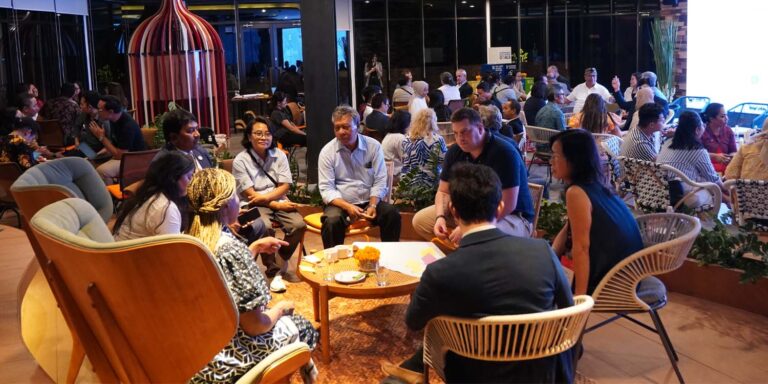
    Networking Event: Singapore Education Lounge

    Networking Event: Singapore Education Lounge

    This exclusive gathering joins together IAFOR and SEN’s networks of educators, researchers, EdTech innovators, and policymakers for an evening of discussion and networking ...
    IAFOR Grant and Scholarship Recipients: The 3rd Southeast Asian Conference on Education (SEACE2023)

    IAFOR Grant and Scholarship Recipients: The 6th Southeast Asian Conference on Education (SEACE2026)

    We are delighted to announce the recipients of IAFOR grants and scholarships for SEACE2026 to be held in Singapore between February 05-09, 2026 ...
    Dr Ben Leong to Present ‘Achieving Competency-Based Learning with LLMs’ at SEACE/SEACAH2026

    Dr Ben Leong to Present ‘Achieving Competency-Based Learning with LLMs’ at SEACE/SEACAH2026

    Dr Ben Leong is an Associate Professor of Computer Science at the School of Computing, National University of Singapore (NUS), Singapore ...

    Sponsorship & Exhibition

    Sponsorship & Exhibition

    Sponsor the Event

    Enhance your brand visibility among a global audience of academics, policymakers, and professionals.

    IAFOR Conference Experience

    Exhibit at the Event

    Showcase your organisation or services in a dynamic conference setting.


    About IAFOR’s Education Conferences

    IAFOR promotes and facilitates new multifaceted approaches to one of the core issues of our time, namely globalisation and its many forms of growth and expansion. Awareness of how it cuts across the world of education, and its subsequent impact on societies, institutions and individuals, is a driving force in educational policies and practices across the globe. IAFOR’s conferences on education have these issues at their core. The conferences present those taking part with three unique dimensions of experience, encouraging interdisciplinary discussion, facilitating heightened intercultural awareness and they promoting international exchange. In short, IAFOR’s conferences on education are about change, transformation and social justice. As IAFOR’s previous conferences on education have shown, education has the power to transform and change whilst it is also continuously transformed and changed.

    Globalised education systems are becoming increasingly socially, ethnically and culturally diverse. However, education is often defined through discourses embedded in Western paradigms as globalised education systems become increasingly determined by dominant knowledge economies. Policies, practices and ideologies of education help define and determine ways in which social justice is perceived and acted out. What counts as "education" and as "knowledge" can appear uncontestable but is in fact both contestable and partial. Discourses of learning and teaching regulate and normalise gendered and classed, racialised and ethnicised understandings of what learning is and who counts as a learner.

    In many educational settings and contexts throughout the world, there remains an assumption that teachers are the possessors of knowledge which is to be imparted to students, and that this happens in neutral, impartial and objective ways. However, learning is about making meaning, and learners can experience the same teaching in very different ways. Students (as well as teachers) are part of complex social, cultural, political, ideological and personal circumstances, and current experiences of learning will depend in part on previous ones, as well as on age, gender, social class, culture, ethnicity, varying abilities and more.

    IAFOR has several annual conferences on education across the world, exploring common themes in different ways to develop a shared research agenda which develops interdisciplinary discussion, heightens intercultural awareness and promotes international exchange.


    About IAFOR

    Founded in 2009, The International Academic Forum (IAFOR) is a mission-driven politically independent non-partisan and non-profit organisation dedicated to encouraging interdisciplinary discussion, facilitating intercultural awareness and promoting international exchange, principally through educational interaction and academic research. Based in Japan, its main administrative office is in Nagoya, and its research centre is in the Osaka School of International Public Policy (OSIPP), a graduate school of The University of Osaka.

    Justin Quezon
    University of Hawaiʻi at Mānoa, United States

    Biography

    Justin Quezon is a master’s degree student in the Learning Design and Technology (LTEC) program at the University of Hawaiʻi at Mānoa, United States, with an anticipated graduation in Spring 2026. His final master’s project examines the use of implicit feedback in video games as a strategy for supporting language acquisition. His research interests include informal learning, adult learning, and the use of educational technologies in asynchronous environments. His design interests focus on learner-centered interfaces and self-directed, interactive experiences.


    Panel Presentation (2026) | Designing Virtual Learning Environments with Augmented Reality and Interactive H5P Activities: A Practical Workshop for Educators
    Eric Hawkinson
    Kyoto University of Foreign Studies, Japan

    Biography

    Dr Eric Hawkinson is a self-described ‘learning futurist’ and Professor at Kyoto University of Foreign Studies, Japan, where he teaches courses on issues related to technology and touring. Known for his creative approach to immersive education, Professor Hawkinson designs experiences where digital and physical learning merge, such as augmented reality art exhibitions, mixed reality games, and virtual field trips. As founder of the educational AR platforms Together Learning and Reality Labo, and chair of the World Learning Labs symposium, his work blends curiosity, research, and play to rethink what education can be. Professor Hawkinson is an Adobe Education Leader, a Google Certified Innovator, and a Microsoft Innovative Educator Expert. He has published over 50 papers and delivered more than 150 talks worldwide, from TEDx to SXSW. His current research focuses on immersive learning, digital ethics, and automation in education, most recently exploring the concept of the ‘automation abyss’ and the shifting role of educators in AI-driven systems. Visit erichawkinson.com for a full listing of Professor Hawkinson’s active projects, research, and publications.

    The Forum (Online) (2026) | AI-Enabled Futures: Collaboration, Learning, and Strategic Decision-Making in Higher Education
    Michael Klemm
    Singapore Education Network, Singapore

    Biography

    Michael Klemm is an education professional with extensive experience in international education, employability, education technology, and entrepreneurship in Asia. In 2020, he founded and currently heads the Singapore Education Network (SEN), a regional alliance of 3,000+ education professionals & organisations in South East Asia and beyond, with offices in Singapore, Malaysia, and Indonesia. SEN is an education community-builder as well as training provider for the education sector and also manages e-commerce platform ‘EdTech Marketplace Asia’, offering 500+ technology-enabled solutions for the education sector in Asia.

    Mr Klemm is also a Venture Partner - Higher Education & EdTech for education consultancy EDT&Partners, as well as Public-Private Partnership Specialist for the ADB-funded STEP UP project in Cambodia. He mentors EdTech Startups in accelerators Singapore National Youth Council, Start2 (Germany) and Next Challenge Foundation (South Korea). He is listed among the Top 100 influencers in EdTech 2023/24 by EdTech Digest.

    Previously, Mr Klemm worked for Minerva University, National University of Singapore, Training Institute NTUC LearningHub, World Vision International, and the International Labour Organization in several countries across Asia (Singapore, India, Thailand, Sri Lanka, and Indonesia), gaining substantial expertise in the education and development sector.

    Featured Roundtable (2026) | Building Networks, Building Careers

    Jervais Choo
    National Heritage Board, Singapore

    Biography

    Jervais Choo is the Deputy Director for Organisational Design and Innovation and currently heads the Innovation Programme office at the National Heritage Board (NHB) of Singapore. His division is responsible for business and digital transformation through creative solutioning and leads NHB’s digital heritage initiatives. Mr Choo has also held other portfolios with the NHB in the past decade, including Programme Director for the Singapore Heritage Festival and Singapore Night Festival, and Deputy Director of the National Museum of Singapore.

    Panel Presentation (2026) | Heritage for Cultural Dialogue: Digital Futures and Shared Memory
    Lisa Lim
    VinUniversity, Vietnam

    Biography

    Dr Lisa Lim is Director of Engagement and Development for the UNESCO Chair in Environmental Leadership, Cultural Heritage and Biodiversity at VinUniversity, Vietnam. She previously held professor positions at universities in Singapore, Hong Kong, Amsterdam, Sydney, and Perth.

    Her interests centre on language contact and evolution, particularly Asian multicultural ecologies; issues of language shift, endangerment, revitalisation, postvernacular vitality, and intangible cultural heritage of minority and endangered language communities; the sociolinguistics of globalisation; and environmental linguistics. Her books include Languages in Contact (Cambridge University Press, 2015) and The Multilingual Citizen: Towards a Politics of Language for Agency and Change (Multilingual Matters, 2018), which was shortlisted for the BAAL Book Prize. Passionate about engagement and impact, Dr Lim’s Knowledge Exchange grants at the University of Hong Kong supported student-led research on linguistic minorities in Hong Kong. For this body of work, she won a Knowledge Exchange award, was featured in Time Out HK, and pitched at a TEDxWanChaiWomen Open Mic event. She is currently a consultant for the Oxford English Dictionary and has been writing a fortnightly ‘Language Matters’ column in Hong Kong’s South China Morning Post since 2016.

    Panel Presentation (2026) | Heritage for Cultural Dialogue: Digital Futures and Shared Memory
    David Ocón
    Singapore Management University, Singapore

    Biography

    Professor David Ocón is an interdisciplinary cultural anthropologist and historian who works on the intersections of Asian cultural heritage with preservation, AI and digitalisation, tourism, geopolitics, and sustainability. He also analyses cultural diplomacy and cooperation in the Asian region, particularly between China, Japan, South Korea, and the ASEAN countries, as well as with external parties like the EU.

    Professor Ocón has over twenty years of experience in the arts, culture, and heritage sectors. As a practitioner, he has led departments within organisations such as the Asia-Europe Foundation (ASEF, Singapore), ENCATC (Belgium), and the Cervantes Institute (Beijing, China), where he was the Head of Culture.

    He is currently affiliated with Singapore Management University, where he leads courses including Cultural Relations and Diplomacy in Asia, Urban Cultural Anthropology, and Cultural Heritage and Social Sustainability. He is also an associated faculty member within the School of Humanities at Nanyang Technological University, Singapore. His academic career includes previous positions at City University of Hong Kong, Hong Kong, and James Cook University, Australia, and for over a decade, he has been a visiting faculty member at the University of Barcelona’s International Cultural Cooperation and Management Postgraduate Programme. Professor Ocón has authored numerous book chapters and articles, published in renowned peer-reviewed journals such as Sustainability Science, AI & Society, The Hague Journal of Diplomacy, The International Journal of Heritage Studies, The Journal of Asian Public Policy, The Journal of Cultural Heritage Management and Sustainable Development, and the European Journal of Cultural Management and Policy, amongst others.

    Panel Presentation (2026) | Heritage for Cultural Dialogue: Digital Futures and Shared Memory
    Ben Leong
    National University of Singapore, Singapore

    Biography

    Dr Ben Leong is an Associate Professor of Computer Science at the School of Computing, National University of Singapore (NUS), Singapore. Dr Leong received his SB, MEng, and PhD degrees from the Massachusetts Institute of Technology (MIT), United States. He has been recognised for his excellent teaching with a number of teaching awards, including the NUS Outstanding Educator Award in 2015. Dr Leong also served as the Chair of the university’s Computer Science Department Standing Teaching Committee from 2017 to 2020. His research interests are in the areas of Computer Networking and Distributed Systems. More recently, he has been working on applying AI for education.

    From July 2014 to June 2019, Dr Leong served as the Director of the Experimental Systems and Technology Laboratory at the Ministry of Education (MOE). In this role, he set up and managed an in-house software development team that successfully delivered a number of applications for MOE. In addition, Dr Leong served as a consultant to the Student Learning Space (SLS) team that built a new learning management system for MOE schools.

    From January 2021 to December 2023, Dr Leong set up and served as Director of the Centre for Computing for Social Good & Philanthropy (CCSGP) at School of Computing (SoC). Since 2020, Dr Leong has served as Chief Data Officer of AI.SG, the national AI Programme, and concurrently as Director of the AI Centre for Educational Technologies (AICET), where his team applies AI to build software platforms for education.

    Keynote Presentation (2026) | Achieving Competency-Based Learning with LLMs

    Tim Winter
    National University of Singapore, Singapore

    Biography

    Professor Tim Winter is Research Leader of the Inter-Asia Engagements Research Cluster at the Asia Research Institute, National University of Singapore. He is the Lead Investigator of the international research project Heritage Diplomacy; connecting histories and futures, (2026-2030; 3.9 Million SGD). Professor Winter has led the development of heritage diplomacy as a cross-disciplinary concept and introduced geocultural power to the analysis of international affairs. His recent articles on these topics appear in Geopolitics, International Affairs, International Journal of Cultural Policy, and Environment and Planning D. His most recent books are Geocultural Power: China’s Quest to Revive the Silk Roads for the Twenty First Century (University of Chicago Press, 2019) and The Silk Road: Connecting Histories and Futures (Oxford University Press, 2022). His current work addresses the re-emergence of civilisational discourses across Eurasia, and how this speaks to current debates about a shifting world order. Professor Winter currently holds an h-index of 33.

    Panel Presentation (2026) | Heritage for Cultural Dialogue: Digital Futures and Shared Memory
    Umberto Ansaldo
    VinUniversity, Vietnam

    Biography

    Dr Umberto Ansaldo is Professor of Linguistics and Dean of the College of Arts and Sciences at VinUniversity, Vietnam. As a linguist, he specialises in research on languages of Asia from a comparative and historical perspective. His publications advance an evolutionary framework of language contact that highlights the role of multilingualism and variation in language change. He previously worked in language documentation and researched endangered contact languages of the Indian Ocean.

    As an educator, Professor Ansaldo has long promoted a student-centred, innovative, and interdisciplinary pedagogical philosophy. In his current role as Dean, he represents a governance style that emphasises meritocracy and transparency and fosters a culture of empathy and belonging. Away from work, Professor Ansaldo enjoys wining and dining and the practice of martial arts. He has lived and worked in many different countries prior to Vietnam, including Amsterdam, Singapore, Hong Kong, and Australia.

    Professor Ansaldo serves on IAFOR’s International Academic Board.

    Panel Presentation (2026) | Heritage for Cultural Dialogue: Digital Futures and Shared Memory
    Shamila Janakiraman
    University of Hawaiʻi at Mānoa, United States

    Biography

    Dr Shamila Janakiraman is an Assistant Professor in Learning Design & Technology (LTEC) at the University of Hawai'i at Mānoa, United States. She teaches graduate level courses in LTEC and her research interests are in emerging technologies, attitude change instruction, online teaching and learning, and competency-based education. Dr Janakiraman is keen on exploring the use of emerging technologies such as augmented reality, virtual reality, game-based learning in facilitating attitude change regarding the learning of different subjects, and attitudinal and behavioural learning regarding environmental sustainability and other socio-scientific topics.


    Panel Presentation (2026) | Designing Virtual Learning Environments with Augmented Reality and Interactive H5P Activities: A Practical Workshop for Educators

    Previous Presentations

    Panel Presentation (2025) | Promoting Cultural Awareness in Artificial Intelligence for Sustainable Education: East-West Collaboration
    Featured Panel Presentation (2024) | Change for Resiliency: One Department’s Strategies for Implementing Culturally Relevant Education with a Focus on Asia and the Pacific
    Daniel Hoffman
    University of Hawaiʻi at Mānoa, United States

    Biography

    Dan Hoffman is an Associate Professor of Learning Design & Technology (LTEC) at the University of Hawai'i at Mānoa. He is the principal investigator of the Advancing Culturally-Relevant Computing project and the president of the International Division of the Association for Educational Communications and Technology. A former classroom teacher, his research focuses broadly on the complex relationships between education and technology. In addition to his research, Dan enjoys working as an Associate Editor for the IAFOR Journal of Education - Technology in Education issues.

    The Forum (2026) | AI-Enabled Futures: Collaboration, Learning, and Strategic Decision-Making in Higher Education
    Joseph Haldane
    The International Academic Forum (IAFOR), Japan

    Biography

    Joseph Haldane is the Founder, Chairman and CEO of IAFOR. He is responsible for devising strategy, setting policies, forging institutional partnerships, implementing projects, and overseeing the organisation’s business and academic operations, including research, publications and events.

    Dr Haldane holds a PhD from the University of London in 19th-century French Studies, and has had full-time faculty positions at the University of Paris XII Paris-Est Créteil (France), Sciences Po Paris (France), and Nagoya University of Commerce and Business (Japan), as well as visiting positions at the French Press Institute in the University of Paris II Panthéon-Assas (France), The School of Journalism at Sciences Po Paris (France), and the School of Journalism at Moscow State University (Russia).

    Dr Haldane’s research and teaching is on history, politics, international affairs and international education, as well as governance and decision making. Since 2015 he has been a Guest Professor at The Osaka School of International Public Policy (OSIPP) at Osaka University, where he teaches on the postgraduate Global Governance Course, and is Co-Director of the OSIPP-IAFOR Research Centre, an interdisciplinary think tank situated within Osaka University.

    A Member of the World Economic Forum’s Expert Network for Global Governance, Dr Haldane is also a Visiting Professor in the Faculty of Philology at the University of Belgrade (Serbia), a Visiting Professor at the School of Business at Doshisha University (Japan), where he teaches Ethics and Governance on the MBA programme, and a Member of the International Advisory Council of the Department of Educational Foundations at the University of Hawaiʻi at Mānoa’s College of Education (USA), collaborating on the development of the Global PhD programme.

    Dr Haldane has given invited lectures and presentations to universities and conferences around the world, including at the United Nations Headquarters in New York, and advised universities, NGOs and governments on issues relating to international education policy, public-private partnerships, and multi-stakeholder forums. He was the project lead on the 2019 Kansai Resilience Forum, held by the Japanese Government through the Prime Minister’s Office and the Cabinet Office in collaboration with IAFOR.

    From 2012 to 2014, Dr Haldane served as Treasurer of the American Chamber of Commerce in Japan (Chubu Region) and he is currently a Trustee of the HOPE International Development Agency (Japan). He was elected a Fellow of the Royal Asiatic Society in 2012, and a Fellow of the Royal Society of Arts in 2015.

    Featured Roundtable (2026) | Building Networks, Building Careers